Showing posts with label Business. Show all posts

Friday, February 28, 2014

How to Procure Goods

IMAG2751 
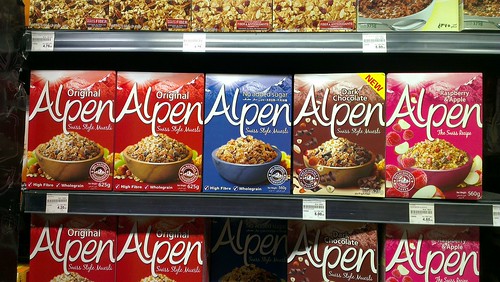
Sit tight! This could become your 'ultimate' selection criteria for the product your are going to buy. Although my example revolves around breakfast cereal, it goes without saying that the below is still applicable across different categories of products.

The process of selecting breakfast cereal may depend on a variety of factors including flavor, quality, country of origin, packaging, and most importantly the price of the product. 

My shortlist resulted in two variants of the Alpen brand; the blue one and the red one. The blue one has 450 gram of muesli and costs JOD 4.70 while the red one has 425 gram and costs JOD 4.60Simple math, 100 gram of the blue one is for JOD 1.04 while 100 gram of the red one is for JOD 1.08. This simple calculation allows us to have a what so called "apple to apple" comparison; in other words to compare the shortlisted products according to the same benchmark and realizing that the blue one has more value for money.

Sometimes the price has implications about the quality (low priced = low quality?). To overcome such risk (ex. when choosing a long haul flight), a wise approach is to go with the second cheapest option. On the other hand, a more creative approach is to consider a substitute from a different category that performs the same function; for example a pencil is cheaper than a pen but could fulfill the same purpose.

Thursday, October 31, 2013

The Essence of Marketing

Mercedes
I am not a big fan of Mercedes (of course this 1955 300SL is an exception) but I have to admit that to me Mercedes does represent a very good example about proper Marketing.

Long time ago, Henry Ford said "You can have any color as long as it's black" referring to the cars he produced. Later, it was obvious that many people preferred different colors for their cars and this is just one reason why we have so many different car models nowadays. Mercedes was able to analyze the needs of its customers then categorize customers into major groups (Segments) and capture those needs with different product offerings. For example: The S Class targets those who want a sense of luxury, while the A Class is a compact car, on the other hand the E Class is for the executive segment and the G Class is an all terrain vehicle.

Proper Marketing starts by identifying a common need between a group of customers who share certain traits like a specific lifestyle, gender, age group, income level, social class, or location; which in Marketing terminology is referred to as Segmentation. Secondly, a product is developed to match the identified needs of the specific segment. Sometimes a generic product serves for a huge majority of tastes and then it is referred to as a Mass product (e.g. bottled water).

What impresses me the most is when Segmentation meets Economies of Scale, here is one observation. A local restaurant in Amman (called Batata) sells french fries, customers can also pick one out of ten sorts of dips to have aside. As the plain product consists of potatoBatata would probably be buying wholesale quantities of french fries - which lowers the price per unit. However, the last stage of making the final product is differentiated from the plain product with the help of dips; thus the restaurant is able to cater to ten different segments with a simple alteration to the plain product!

Friday, April 29, 2011

Conceptual Consumption

An art-crime, a dusty Harley Davidson!

This is one gorgeous Harley-Davidson motorcycle! According to Harley-Davidson their vision is stated as follows:
"We fulfill dreams inspired by the many roads of the world by providing extraordinary motorcycles and customer experiences. We fuel the passion for freedom in our customers to express their own individuality."

So, it looks to me that riding an HD is all about freedom mixed with a blend of being rebellious. Yet some would go for a Harley not to satisfy the freedom need, but to have the image of a freedom-loving rider and its associated lifestyle. Even in some countries where owning a motorcycle needs an exclusive sort of license, someone might buy an HD to indicate he/she has the power of making it happen; this type of behavior is called conceptual consumption.

While physical consumption is related to the core benefit or quality of a product (example: food in a restaurant) conceptual consumption is related to the psychological attribute of consumption (example: the exclusivity of experiencing that restaurant). Interestingly, a consumer might sacrifice a physical consumption experience for a conceptual consumption experience in order to impress others and achieve a self-fulfilling prophecy. For instance, buying a a high-consuming car to be associated with the authority and power of that gigantic car.

Conceptual consumption was introduced by Dan Ariely and Michael Norton (Ariely and Norton 2009)* and one sure thing is that it can be utilized in business to sell something and drive the desired behavior of the consumer. My special thanks goes to Dr. Phil Jones for introducing me to this term.

* Ariely, Dan and Michael I. Norton (2009), “Conceptual Consumption,” Annual Review of Psychology, 60, 475-499

Saturday, February 26, 2011

Value Added Services

Stay Tuned...

As you can tell I had some black olives lately, but is there any difference between the two plates? One plate has pitted olives and the other has sliced ones, the grocery store I go to sells them for JOD 3.35/Kg and JOD 3.9/Kg respectively.

Impressive! What justifies being charged an extra 18% for a sliced olive than the pitted olive. The answer relies in Value Added Services (or VAS). An olive is a core product, yet slicing an olive is an extra service.

If you are a seller, VAS can be utilized so that it gives more value for the money paid by the customer; in other words it might justify the price desired by the seller. On the other hand VAS may be used to present an exclusive component that distinguishes your customer than others or even increase loyalty.

If you are a customer you can also utilize VAS but it depends on your priority as buyer. If all what you care about is the standard feature, look for a product with minimum VAS possible as it will usually be more affordable (Remember the Postal Saving Bank example? No ATM + No Internet Banking = Higher ROI).

SMS, MMS  and GPRS are all popular example of VAS that are widely spread among the telecom industry.
Related Posts Plugin for WordPress, Blogger...