Showing posts with label Problem Solving. Show all posts

Wednesday, August 10, 2016

Issuing the Certificate of Non Criminal Record (in Jordan) - شهادة عدم المحكومية

First you go to this link and create an account
http://ncrc.moj.gov.jo/NCRCApplication/faces/com/moj/ncrc/issuingncrc/customer.jspx
You fill your details (submit request / تقديم طلب), including the desired language of the certificate (this is good news because previously it used to be issued in Arabic only) and if you want to collect it in person, or via Aramex delivery.

The application then provides you with a unique ID for your application (in my case it was a 7-digit number) and you will use this ID to pay for your application in a later stage.

Then you go to this link 
www.efawateercom.jo and create an account, but keep in mind that you will have to pay using a credit card (visa or mastercard).

You fill the details through the Add New Billing button
Biller category: government service
Biller name: NCRC

Service: NCRC 
Billing number: you enter the ID you received earlier


The item will be visible in your dashboard, then you click Process to Pay, fill your credit card details and by this you are done. I received an email on the same day that my application is ready, and it took my about 15 minutes to collect it in person.



Saturday, April 30, 2016

March' 16

IMG-20160327-WA0016

This is Floria, post my horseback riding exam. March was an eventful month, with some good lessons learned too. Two trips, one race, and two exams. Bting more than I can chew? Or, if you want something done, ask a busy person? At one point I did not have a choice, the horseback riding exam and the Dead to Red race happen once a year.

Number 1: a business trip to Cote d'Ivoire
Team Cote d'Ivoire prefer to do the workshop in French and am not fluent in French. Two options, either to give the opportunity away, or to take my chances. Eventually, I left my comfort zone, and the outcome was -despite all my mistakes- that I officially completed my first workshop in French (chapeau bas pour moi).
Takeaway: good things come to you when you leave the comfort zone

Number 2: Dead to Red, a 242 km relay race 
I usually run in the evenings where I have to drive to my running track. Too exhausted to follow my habit I had to come up with a new plan: a new running track where I run in the morning directly from my house. Even when I was in Cote d'Ivoire I used to run in Abidjan.
Takeaway: importance of adaptation

Number 3: DELF A2
This is a French language exam held by the Institut Francais, the exam occurs three times a year, but I felt I was ready for this session.
Previously, I missed the last session of 2015. My trip to Cote d'Ivoire was also a very good exercise, practicing French and solving mock exams.
Takeaway: if you miss a train, prepare yourself for the next one

Number 4: horseback riding exam (perhaps the sad part of the story)
The exam has two parts, I passed level two but I did not pass the jumping part (yes I admit I failed!). Strangely this time it felt fulfilling to fail. I have been thinking of doing this exam since last year, enrolling for the exam actually put me under the commitment to prepare hard by reading, training intensively, and watching youtube videos, which helped me acquire more knowledge.
Takeaway: trying and failing still feels better than not trying because you are too afraid

Number 5: business trip number 2
Management decided the trip will not happen in March anymore.
Takeaway: in reality, not all of what you expect will eventually happen.

Overall, March was an exam itself, and the major takeaway is: the right time is always now, you will never be perfectly ready.

Thursday, April 30, 2015

'The Art' of Sleeping on a Long Haul Flight

The Art of Sleeping on a Long Haul Flight

So lately I survived a 14 hour flight, usually I find it hard to sleep on a flight but this time I think I did pretty much well. And as I consider this a skill, that can be acquired over several iterations and perfected by exercise, you may find here my ultimate list:
  • Wear sweatpants with zippers, comfortable and you leave the passport and money in the pocket that has zippers
  • Case for glasses (yes I wear glasses)
  • Get a neck pillow
  • I take sleeping pills right when boarding, ask your pharmacist for the herbal based one (does not need a prescription)
  • Cap to keep off the light from your face, do not use the typical eye cover as the band is not comfortable
  • Use small earphones like the ones that come with the ipods. Although the big ones provide good insulation but they are not comfortable especially while sleeping 
  • I use a cool app called (Muji to Sleep) which plays natural sounds (birds, forest, a stream ...) and sometimes I listen to verses from the holy Quran
  • Read in your native language, for me it uses less concentration
  • Remember to take off your shoes.
Last but not least, timing of the flight is essential, try to pick one overnight.
* update: as of Nov 2015, I don't use a hat anymore, I just use the blanket to cover my face.

Tuesday, December 30, 2014

The Gaps Model of Service Quality

Gap
There is this popular framework that is related to service quality management, it is called The Gaps Model of Service Quality (I think: Zeithaml et al. (2000)). Briefly, the framework says that there is a group of gaps that eventually influence the difference between what the customer is expecting and what he/she is perceiving, which is also linked to the level of satisfaction of the customer.
  • Gap 1 is between what customer is expecting & what management 'thinks' customer is expecting
  • Gap 2 is between what management 'thinks' customer is expecting & the standard they chose to satisfy this expectation
  • Gap 3 is between the standard chosen by management & the product/service being delivered
  • Gap 4 is between product/service being delivered & what is being communicated about this product/service to customers
However, my post today is more of a reflection upon this model. An intriguing phenomena that I witness nowadays in this world, specifically related to the ideology of the extremists.
  • Gap 1: is the original source of information a flawless one or is this just an assumption? how accurate is this source? does it fit within the right context?
  • Gap 2: if the piece of information is being carried through a middleman, has this person fully and correctly understood this piece of information? has this person correctly explained this piece of information to its final destination? gap 2 is of course cascaded in case there was a group of middlemen (instead of one).
  • Gap 3: has the final recipient accurately comprehended this piece of information? any distortion along the way?
I am really shocked to see how people tend to underestimate the first two gaps and to totally exclude the third gap from the equation - which is related to their own understanding of things. I am also shocked to realize that the threat of extremism is not that far away. It is ok to make assumptions, as long as we keep in mind how devastating an inaccurate assumption could be. You know, there are gaps of knowledge too.

Saturday, October 25, 2014

How to Immigrate to Australia (Skilled Independent Visa - subclass 189)

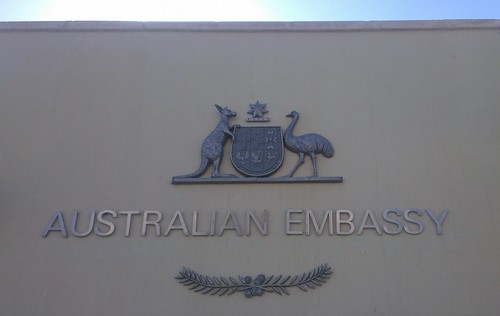
Australian Embassy
Disclaimer: I am not an official immigration consultant, this blog post is an attempt to collect some useful information in one source.

The skilled independent visa of Australia (subclass 189) allows you to work and live in Australia (and New Zealand) and is the first step to becoming an Australian citizen. Here is the general concept, you get points based on a group of factors (age, professional experience, marital status etc.. details here: link), getting 65 points almost guarantees that you will get the visa. The whole process takes around one year and costs about JOD 3,000.

Step #1: Professional Consultation
Visit Reach Immigration, (link, contacts: +962-65521114  and +962-795999429). No, I do not get any commission from these guys but they are really professional. You can ask them for a general consultation about your chances and accordingly proceed with them or go through the process on your own.

Step #2: The IELTS Exam
Usually you need to get a band 7 in each of the four sections of the exam. It is not so easy to do this right from the first time, here are some useful tips (link).

* important update (Nov 2015): I recently heard that you can take the PTE test instead of IELTS, which is relatively better pearsonpte.com/test-takers/test/

Step #3: Skills Assessment
Cost: JOD 300, duration: three months
Australia is looking for certain skills, this list (link) has the occupations that are in demand and the corresponding assessing authorities. So, for example ICT business Analysts are assessed through ACS (The Australian Computer Society). There is a ceiling for the occupations as well (link, occupation ceilings tab) which is reset every year in July.

It is not a matter of the job title itself, but the assessing authority has to evaluate the duties handled within the job and make sure it fits with the academic qualification of the applicant. Here is a sample of duties for what ACS considers a business analyst (link), the obtained work letter should also match the official template of the assessing authority (example: ACS template link).


The assessing authority requests certified copies of original documents, the Australian embassy in Amman is authorized to stamp such documents and they are very cooperative and professional. Book an appointment first (+96265807000, extension: 125), you would have to stamp a copy of your passport, the employment letter, and academic qualifications (degree and transcript of courses) where it costs JOD 20 to stamp each document.

Then you upload a scanned copy of the documents to the assessing authority (example: for ACS link) and the assessing authority in its turn sends back a result via email.


Step #4: Submitting an Expression of Interest (EOI)
Cost: free, duration: one month
The department of immigration introduced this step to make the process more efficient. Applicants do not have to upload any documents in this stage, but if the result of the EOI is positive, it means that there is a high certainty that the applicant will get the visa given that the details he/she provided earlier were all accurate. EOI should be submitted through SkillSelect (link). The same link has some useful details, such as the invitation rounds tab which shows a log of previous invitation rounds.

I am not 100% sure about this but as far as I know, state sponsorship can be requested within the EOI (Skilled Nominated Visa - subclass 190). Applying for this visa gets the applicants 5 extra points but also means he/she has to work in the sponsoring state for the first two years.

Step #5: Apply for the Visa
Cost: JOD 2,500, duration: three months
An EOI positive response email will have a link that automatically leads to the visa application portal (this one: link) fees are payable using a credit card. After several weeks of submitting the application a case officer is assigned, who will ask the applicant to provide any remaining documents such as:

1) Birth certificate in English: can be obtained from the Civil Status and Passport Department of Jordan (1st circle, next to the Iraqi embassy).

2) Supporting evidence in regards to the work experience.


3) Police check: a non-conviction certificate can be obtained from the court in Abdali but it would be in Arabic language. You have then to translate it from an authorized office, Al-Zahra' Translation Center (+962-799404022) is opposite to the court and can do this in one day. Then you have to ratify the document from the Ministry of Foreign Affairs in rainbow street. (update, Aug'16: you can now submit your request to issue a non-conviction certificate online, and it can be issued in English, so there would be no need for a translation service, check out the details here:  www.7aleva.com/2016/08/issuing-certificate-of-non-criminal.html )


4) Evidence of Health: there is a list of clinics that are officially recognized by the Australian embassy (link). Dr Amy Khoury clinic is open on Saturdays and she is super friendly, the medical check costs JOD 130.

Last but not least, I want to thank Tareq, Rami, Feras, Taimour, Laila, Ala, Bashar and Omar, this post would not have been published without your help.

Ps. Here is a blog that has more details about immigration to Australia (link).

Sunday, August 31, 2014

Qualitative & Quantitative Research

Mr. Smiley Face Waiting for His Turn

"If we knew what it was we were doing, it would not be called research" - Albert Einstein.
I really admire research! Research is powerful enough to helps us reduce the risk of making a bad choice. Essentially in terms of business, research is conducted to discover customers' needs and to see if these needs are worth catering for through a product/service. Yet we also use research in our daily life (esp. Qualitative research), there are two main sorts of research:

* Qualitative Research
When you intend to buy a new car, or decide on your upcoming holiday destination you ask some friends about their recommendations. These are all examples of Qualitative research, you look for what some people are doing and try to pick an option from that list. This type of research helps us build new knowledge and expand the list of options.

Interviews and focus groups are amongst the popular tools to conduct Qualitative research, having a diverse group of participants (age, gender, background etc..) ensures richer findings. The thing about Qualitative research though is that the findings cannot be generalized, and this is where Quantitative research comes into place.

* Quantitative Research
This sort of research is used to reduce findings to the ones that are really important, in other words helps us make a scientific conclusion.

A popular tool to hold such research is a survey, but the sample should have at least 30 respondents (of course having more respondents better represents the population). Quantitative research involves sophisticated mathematical sorts of analysis using SPSS or MS Excel tools (including correlation, anova, t-test, chi-square, analysis.. the list goes on) and the what so called P-value, which if less than 0.05 means the observation is not happening due to chance or in other words is statistically significant.

One last thing, sometimes people unintentionally express thoughts that are different than what they really have in mind. So, findings are not sacred. And what does this picture have to do with research? Simply, research usually leaves you happy with the end result!

Wednesday, April 30, 2014

About The Engineering Sense

The Eurostar

I am originally an Engineer. Despite not being an A student, that did not prevent me from being proud of my Engineering mindset (non-Engineers don't need to worry, we try our best to accept you in our world). Back when I was doing my Engineering degree, many of our professors made an emphasis on the what so called 'Engineering Sense'.

Several years later, I went on writing this post and realized it is not easy to find an explicit definition for the term 'Engineering Sense', thus I thought of presenting the pillars of this term based on my own understanding in addition to impressions I got from some fellow Engineers:
  • practicality, it works right
  • efficiency, providing the best solution
  • a structured way of thinking into building a solution
  • outside the box, presenting an untypical alternative
But what does it have to do with the Eurostar? To me, the drilling project of the Channel Tunnel is an example of Engineering Sense. To construct this undersea tunnel that connects England and France, a drilling machine was used from each side simultaneously. Typically, one would expect retrieving the two machines once the project is done. However, as machines met halfway through, one actually dug downwards and got buried (for good) into the floor while the other continued into the other direction.

Sunday, June 30, 2013

My Productivity Tools

007 
Productivity matters to me, hence this post presents my 'top-secret' productivity instruments!

In my opinion, brainstorming needs a smooth flow of ideas. For this purpose, I usually use:
  • High density blank papers. Using a metal clip, I bind some A4 papers that have been used on one side
  • A dark pencil; preferably a 4B
  • Easy flowing pens; such as Kores, Papermate Profile and Bic (I don't know the name of the one in the picture but it is awesome)
  • Sometimes a marker is also handy
To have a neat plan I also use:
  • A squared note pad; Rhodia is a good one
  • Fine pens, I could not find anything better than Stabilo Point 88
  • An HB Pencil
  • An eraser which can also be used to hold my phone
Using flip charts and markers to do some creative brainstorming is one of the main concepts introduced by a book titled Gamestorming. On a second note, I realized that this post was probably influenced by a cool blog titled 99u (specifically, by this post and this post - Thanks Lucas).

Thursday, February 28, 2013

Correlation & Causality Explained

Lancaster University 
I learnt that the assumptions we make can turn out to be very destructive. Of course, wrong assumptions can occur due to many reasons, but in particular some are related to our inability to differentiate between correlation and causality. Correlation is a link between two measures, if one changes the other varies accordingly at the same (or the opposite direction). However, having two correlated measures does not always mean that one caused the other; actually both could be outcomes of a third variable.

Researchers usually identify causality by holding an experiment over two samples where one sample would be influenced by the factor under investigation and the other sample would be left untouched. This way the effect of the factor is identified in comparison to its absence. It is good to note that causality implies correlation but not the other way around.

Away from scientific jargon, my performance at work seemed to have improved recently. At the same time, a new challenge showed up at work which at the first glance might be the source of motivation that triggered improvement in my performance. After giving it a second thought, it looks like the slight improvement that I witnessed showed up as a result to submitting my dissertation, which took place at the same period and accordingly allowed me to dedicate more time and focus for my work.

The photo above is for the campus of Lancaster University, as I learnt the difference between correlation and causality while doing my MBA, this post goes to LUMS.

* Update Apr-2013: I forgot to mention that one of the ways to avoid building false assumptions is for us to simply ask questions and validate what we have in mind.

Sunday, February 26, 2012

Getting to Yes: Reflections

Getting to YES!
I have just finished reading Getting to Yes and I thought of sharing some reflections. It is good to note that the authors of this bestseller (R. Fisher, W. Ury and B. Patton) wrote this book based on the work of the Harvard Negotiation Project to build a simple strategy towards holding negotiations. Getting to Yes can guide you in business, diplomatic or even daily life negotiations, here is an interesting topic I learned from this book; the Theory of Cognitive Dissonance.

This theory falls within psychology but is easily explained through the story of the fox and the grapes; when the fox was not able to reach the hanging grapes he/she convinced himself that the grapes were sour.

The Theory of Cognitive Dissonance implies that we as humans cannot hold two inconsistent thoughts in our minds, and in such a case our subconscious will instinctively act to reduce this inconsistency. If you give it a thought, it will help you understand some surrounding behaviors that seemed irrational before. Here is the tricky part, Cognitive Dissonance can be used in negotiations as a tool to convince others about your point, for example; attack the problem yet give positive support for the person on the other side. In such a case it will cause inconsistency to the other person and it is assumed that they will react subconsciously towards solving this contradiction in your favor.

There is a lot to be learned from this book, I don't want to spoil it for you but I will leave BATNA, the difference between positional and principled negotiations, and Jiu Jitsu negotiation as a teaser. My special thanks goes to Dr. Phil Jones as he recommended that I read this book.

Bonus: Here is a nice Cognitive Dissonance experiment, Enjoy!

Wednesday, March 30, 2011

SWOT Analysis

SWOT
SWOT analysis is a strategic method which helps us make a decision or even solve problems. SWOT stands for: Strengths, Weaknesses, Opportunities and Threats.

Strengths are our advantages over others
Weaknesses represent our disadvantages in relation to others
Opportunities are the positive conditions in the external environment
Threats represent the unfavorable external circumstances

Once we set our SWOT analysis, one of the wisest things to do would be to convert our weakness into strength or even the threats into opportunities. My favorite example would be of an Ethiopian named Haile Gebrselassie.

Haile grew up in a farm where he had to run 10 km each day back and forth to get to the nearest school. Nowadays, he runs with his left arm bent because of being used to holding school books while running yet the difference is that he is now one of the greatest runners of all time; Haile has set so far 20 world records and clearly overcame his weakness and threats and made them into strengths and opportunities.

Saturday, November 15, 2008

The Sandwich Technique

Turkey Sandwich

By the time you see this delicious Turkey sandwich it would have already been converted into calories thanks to my stomach. Today I am going to write here about the what-so-called "The Sandwich Technique".
Sadly, most of us had the chance to tell bad news. The Sandwich Technique helps you in doing that with the minimum possible losses. Similar to our Turkey sandwich the below sandwich helps you understand more what I am talking about here.

Sandwich Technique

First of all you say one piece of good news, after that the bad news, and once again another piece of good news. The surrounding pieces of good news (at the beginning and at the end) are there to tender the situation.
By the way, this Turkey sandwich was what I have made for my late dinner last night, Yummy!

Friday, October 10, 2008

The Six Thinking Hats

Hello again, in this post I am going to tell you about the Six Thinking Hats.
The Six Thinking Hats is a decision making technique that helps you cover all the possible ways of thinking and helps you avoid the risk of making a wrong decision, it was created by Edward De Bono.
Now first of all we should be able to think before being able to think in colors right? Just Kidding.

Ok, the six colors are Black, White, Red, Yellow, Green, and Blue.
Black is the negative way of thinking and expecting the worse.
White is related to thinking about numbers, facts and statistics.
Red is to think while taking feelings into consideration.
Yellow is to think in the positive way.
Green is to take the creative approach.
And finally the Blue hat is used to control and order the thinking between all the previous hats (think about thinking).

Brain Storming can highly utilize the Six Thinking Hats. Brain Storming is to consider all the possible thoughts and ideas in order to discus them and make up a decision about which is the best plan to be followed.

Let's now try to use the Six Thinking Hats in this example:
There is a family that is considering to move in to a new house because their old (current) house is not fitting any more, here is what goes on;
Blue would give turns for each of the family members to say their opinions according to the color being used at the time. Let's give the father this role and let him be the one wearing the Blue Hat.
The father would ask the family to introduce all the Red hat thoughts; so it is now the time for emotions. A Reddish thought might be "I would love to just move in to a new house, I am fed up with this house and I cannot live in it anymore"
Now the father will also change the hat to the Yellow one; an example on a Yellow-type thought would be "Maybe if we wait for the next year the value of our house would increase and we will get a better price than the possible price at this time"
Green would be about using the current house by doing some improvements that would give more space; for example use part of the balcony to expand some rooms and win some space.
White would be about facts;
We only have $1000 and we cannot afford buying a bigger house that would cost at least $2000.
Black would be about expecting the worse, taking a loan will mostly likely leave us broke because of the high interest rates, LOANS ARE DANGEROUS and by then we will loose both our home and our savings.

For sure if you want to read more about this issue you can just google (six thinking hates).
Practice makes perfect, next time you face any decision try to use the Six Thinking hats by yourself. Enjoy!
Related Posts Plugin for WordPress, Blogger...